91 posts tagged with "Composter"

Compost bin or compost machine convert waste into organic compost

View All Tags

Kitchen Composter vs Food Waste Recycler: What’s the Real Difference?

· 12 min read
Moore
Moore
Tech Writer, Meteorology Journalist, Gardening Lover

A kitchen composter and a food waste recycler are often placed in the same shopping category. But they do not always do the same biological job.

Some machines dry and grind food scraps into shelf-stable grounds. Others support a microbial process and create compost base for soil blending.

Both can reduce trash odor and daily food-waste friction, but only one category is built around real composting biology.

Simple rule: ask what happens inside the machine, and ask what the output needs before it can return to soil.

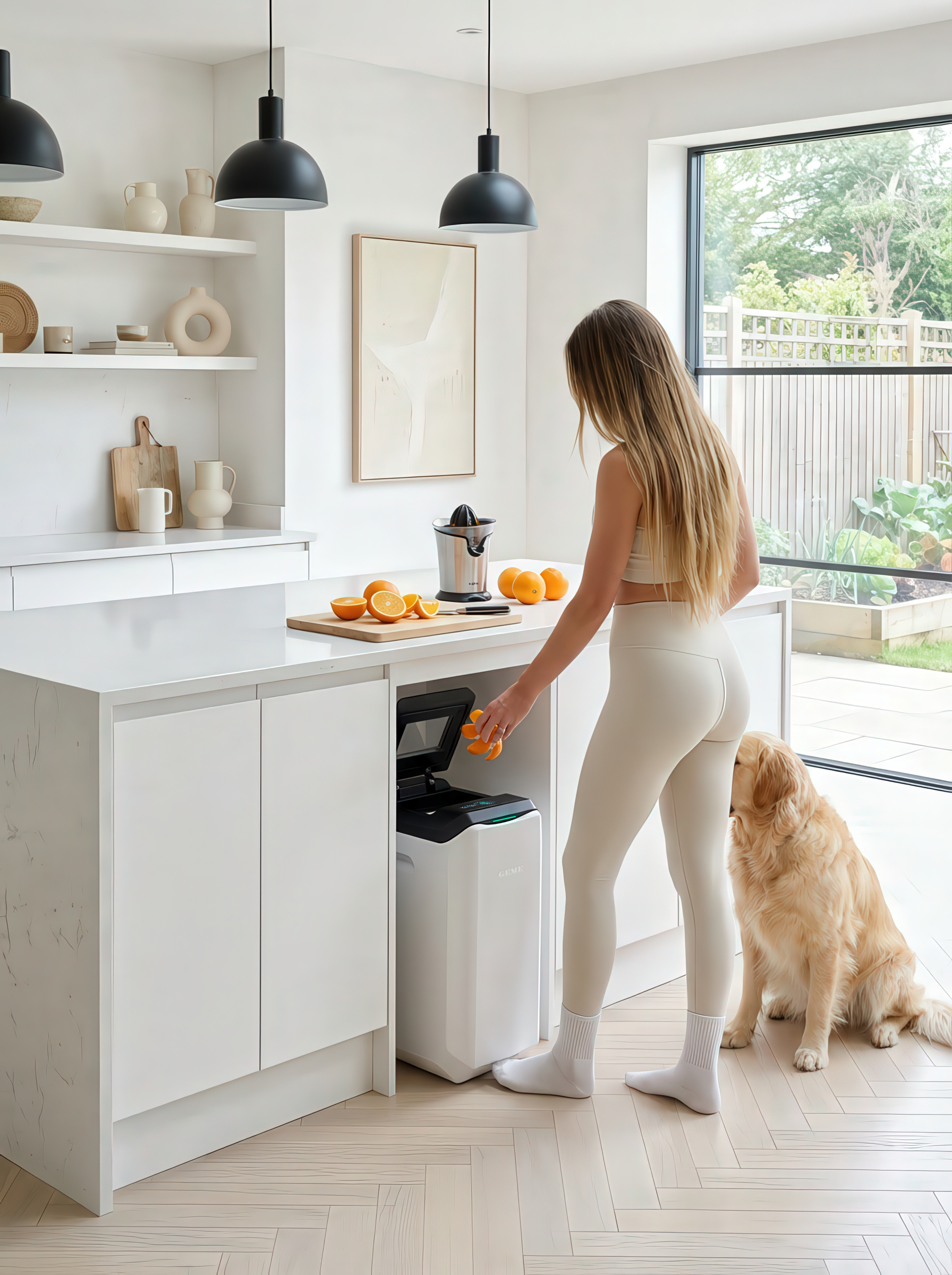
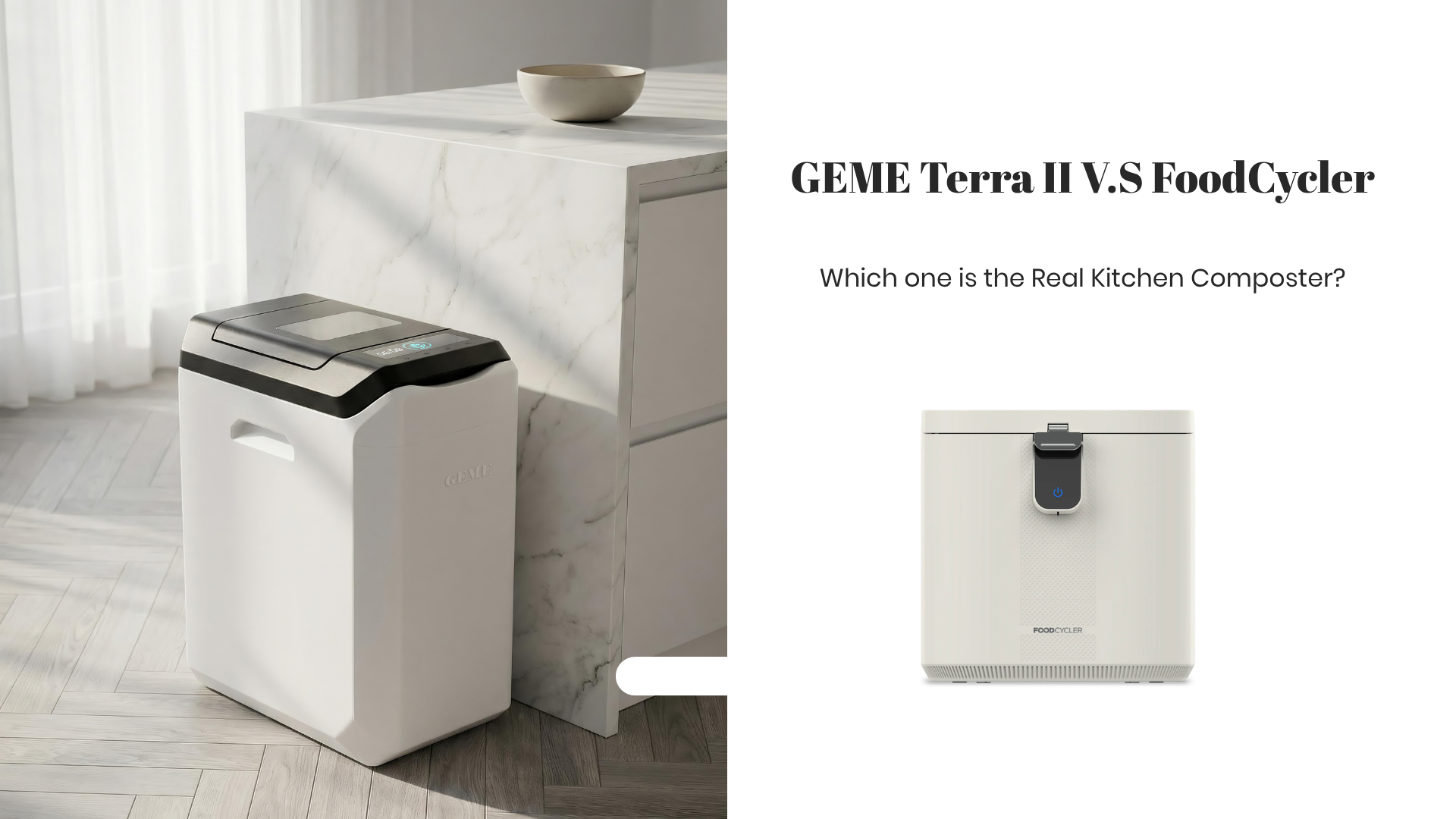
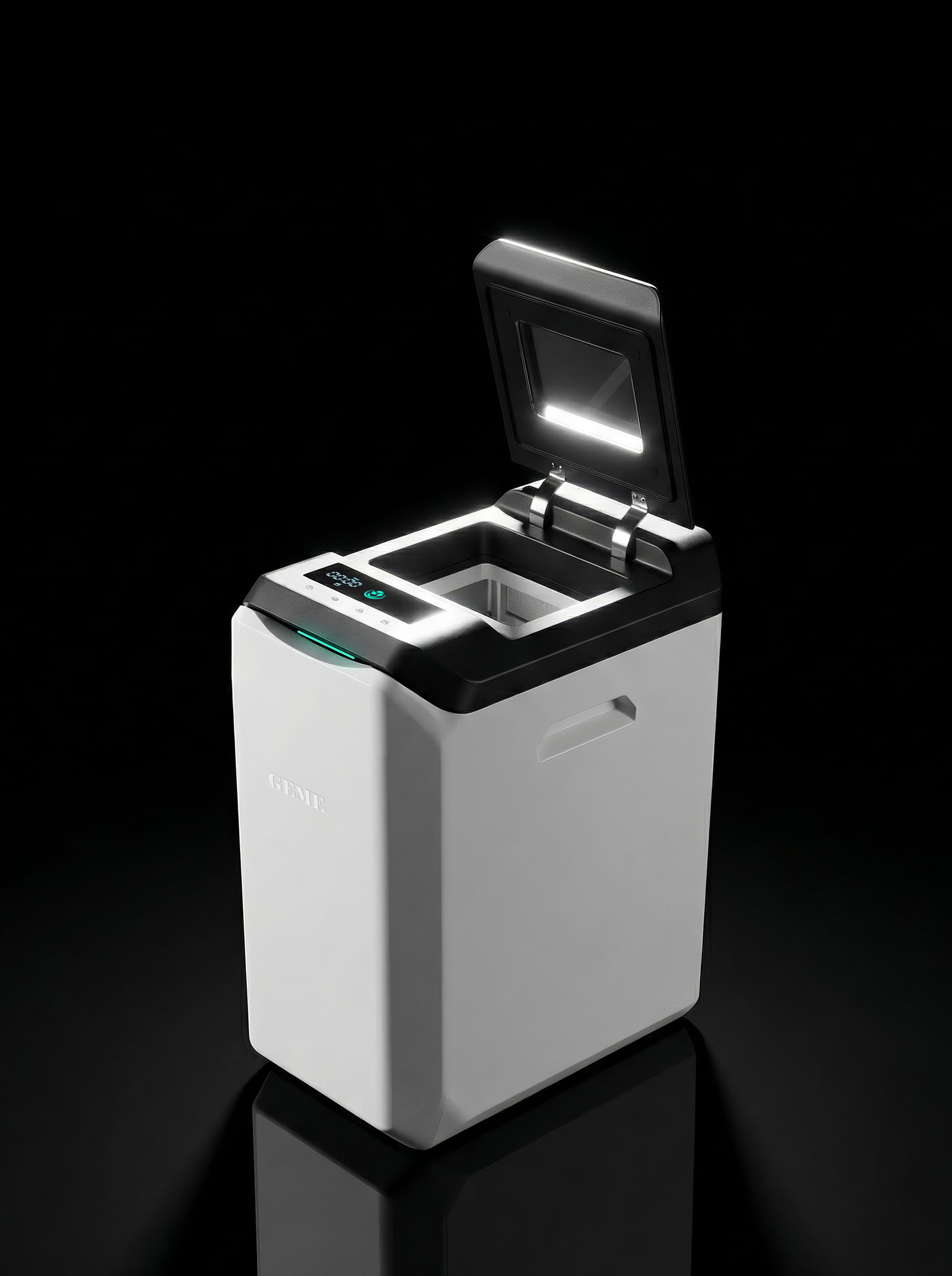
GEME Terra II real kitchen composter compared with food waste recyclers


Quick Answer

A kitchen composter should support biological decomposition.

A food waste recycler often reduces, dries, grinds, or stabilizes scraps so they are easier to store, dispose of, or further process.

That difference matters because output from dry-and-grind food recyclers is not necessarily finished compost.

EPA guidance says residential food-scrap pre-processing appliances that grind and dehydrate food scraps reduce volume and weight, but they do not directly produce compost. Their output should be composted, cured, or otherwise further treated before use.

GEME Terra II is positioned differently: it uses living microbes and adaptive control to create a moist compost base for soil blending, with no drying and no routine replacement odor filters.

That makes it a stronger fit for users who want a real soil-return routine instead of only a food-scrap reduction routine.

Related reading:


Key Takeaways

  • Names can be misleading. “Kitchen composter,” “electric composter,” and “food waste recycler” are often used loosely.
  • Process matters most. Microbial composting, dehydration, grinding, fermentation, and storage are not the same process.
  • Output matters next. Moist compost base and dry food grounds have different soil-use requirements.
  • EPA draws an important line. Residential grinding/dehydrating appliances reduce scraps but do not directly produce compost.
  • Food recyclers can still be useful. They can reduce odor, storage mess, and trash volume, especially for users without soil access.
  • Real composting needs biology. Oxygen, moisture, microbes, temperature, and time all shape the result.
  • Filters change ownership cost. Many food recyclers rely on replaceable carbon filters, while GEME Terra II uses no routine replacement odor filters.
  • Best choice: choose a kitchen composter if you want soil return; choose a food waste recycler if you mainly want cleaner food-waste storage and reduction.

Table of Contents

  1. Why These Terms Are Confusing
  2. Kitchen Composter vs Food Waste Recycler: Working Definitions
  3. Side-by-Side Comparison
  4. What Comes Out of the Machine?
  5. GEME, Lomi, Mill, and Reencle: Category Map
  6. Filters, Consumables, and Ownership Cost
  7. Who Should Choose a Kitchen Composter?
  8. Who Should Choose a Food Waste Recycler?
  9. Practical Decision Rules
  10. Frequently Asked Questions
  11. Summary
  12. Sources

Why These Terms Are Confusing

The confusion starts because brands, retailers, and review sites often put different appliances into the same category.

A thermal food recycler, a dry-and-grind bin, a microbial composter, a Bokashi bucket, and a worm bin may all appear in search results for “best kitchen composter.”

But the customer problem is not one single problem.

Some people want to stop food scraps from smelling in the trash. Some want to reduce weekly garbage volume. Some want a material they can eventually use in soil. Some want a real composting routine inside the home.

So the right comparison is not only:

Which machine is faster?

The better question is:

What process is happening, what output is created, and what must happen before that output touches plants?


Kitchen Composter vs Food Waste Recycler: Working Definitions

What Is a Kitchen Composter?

A real kitchen composter supports biological decomposition.

In practice, that means microbes, oxygen, moisture, warmth, and time are part of the process.

The output may not be identical to outdoor finished compost, but the machine is built around composting biology rather than only physical reduction.

GEME Terra II fits this definition because it uses living microbes and adaptive control to create a moist compost base.

The output is intended to be mixed with soil, not used as pure potting media or treated as instant fertilizer.

What Is a Food Waste Recycler?

A food waste recycler usually focuses on reducing, drying, grinding, or stabilizing food scraps.

The goal is often odor control, easier storage, lower trash volume, or a dry material that can later be put into composting, collection, gardening, or disposal channels.

This category can be very useful, especially for people who do not have soil access.

But “recycled food scraps” should not automatically be treated as finished compost.


Side-by-Side Comparison

QuestionKitchen ComposterFood Waste Recycler
Main processMicrobial decomposition under controlled conditionsDrying, grinding, reducing, or stabilizing scraps
Primary goalCreate compost base for soil returnReduce odor, volume, mess, and storage burden
Output textureOften moist, soil-like compost baseOften dry grounds, flakes, or reduced food-scrap material
Can it go directly to plants?Usually needs screening and soil blending; follow product guidanceUsually needs further composting, curing, or soil processing before responsible use
Odor strategyBiological balance plus airflow and odor-control systemOften drying plus carbon filtration or sealed storage
Best forUsers who want a soil-return routineUsers who mainly want cleaner food-waste handling and storage

What Comes Out of the Machine?

Output is where the difference becomes real.

If a machine heats, dries, and grinds scraps, the output may be cleaner, smaller, and easier to store.

But it is not automatically finished compost.

EPA guidance is especially useful here: residential food-scrap pre-processing appliances can reduce volume and weight, but their output should be composted, cured, or otherwise further treated before use.

That is a very different claim from “ready compost.”

Dry Grounds Are Not the Same as Compost Base

Dry grounds can be useful.

They are often less smelly, easier to store, and less messy than raw scraps.

But if the material has mainly been dehydrated and ground, it still needs biological processing before it behaves like compost in soil.

Moist Compost Base Is Not a Failure

A real microbial process needs moisture.

GEME output is better understood as moist compost base for soil blending, not dry chips.

Large unfinished pieces should be screened and returned to the chamber, and screened output should be mixed with soil before plant use.


GEME, Lomi, Mill, and Reencle: Category Map

The category is not black and white.

Some products are more clearly food recyclers. Some are microbial composters. Some use marketing language that can blur the line.

The practical way to compare them is by process, output, consumables, and what the output needs next.

Product TypeHow to Understand ItBest Fit
GEME Terra IIReal microbial kitchen composter using living microbes, no drying, and compost base for soil blendingHouseholds that want a real soil-return routine
GEME ProLarger-capacity microbial composter for heavier daily routinesLarger families, heavier kitchens, and users needing more headroom
Lomi-style food recyclerCompact food-recycling appliance with drying/reducing logic and recurring filter or pod-related ownership considerationsUsers prioritizing compactness, speed, and reduced trash mess
Mill-style food recyclerDry-and-grind system that turns scraps into dry grounds and uses carbon filtrationUsers who want low-odor storage, dry grounds, and a larger bin-style routine
Reencle-style microbial composterIndoor microbial decomposition appliance that mirrors aerobic composting in an optimized environmentUsers interested in indoor microbial breakdown with a smaller daily processing envelope

The point is not to say every food recycler is useless.

The point is to stop calling every reduced-food-scrap output “finished compost.”


GEME Kitchen Composter

GEME Terra II: Real Kitchen Composter

✅ The Best Kitchen Composter in 2026

✅ Biologically Active Composting System

✅ Quiet, Odour-Free, Real Compost

✅ Zero Filter Costs, No Refills

✅ Reduces Composting Time to Days

Explore GEME Terra II

Filters, Consumables, and Ownership Cost

The purchase price is only part of the decision.

Many food waste recyclers rely on replaceable carbon filters, pods, or recurring consumables to manage odor or support the cycle.

That changes the long-term cost and the maintenance routine.

GEME Terra II takes a different path with no routine replacement odor filters.

For households comparing real ownership, that matters because a lower-effort daily routine is not only about what happens on day one.

Ownership FactorWhy It MattersQuestion to Ask
Replacement filtersRecurring odor-control parts can increase long-term costHow often do filters need replacement?
Pods or additivesSome systems rely on recurring inputs or cycle enhancersAre these optional, required, or bundled?
Output handlingDry grounds, compost base, and raw scraps require different next stepsCan I use the output, store it, or must I send it elsewhere?
Daily capacityAn undersized unit can create hidden workDoes it fit my actual food-waste rhythm?

Who Should Choose a Kitchen Composter?

Choose a real kitchen composter if your end goal is soil return.

That means you want the output to become part of a gardening, potting, raised-bed, balcony, or soil-care routine.

A Kitchen Composter Is Better If...

  • You want a real microbial process, not only dried food scraps.
  • You have houseplants, garden beds, raised beds, containers, or soil access.
  • You care about compost base for soil blending.
  • You want to reduce recurring filter or pod dependence.
  • You are comfortable screening output and mixing it with soil.
  • You want a product story closer to “feed the soil” than “store dry grounds.”

Who Should Choose a Food Waste Recycler?

Choose a food waste recycler if your main pain point is trash management.

If you live in a high-rise, do not garden, do not have soil access, or mainly want to reduce odor and bin volume, a food recycler can still be a practical tool.

A Food Waste Recycler Is Better If...

  • You mainly want food scraps to smell less in the kitchen.
  • You want reduced volume and easier storage.
  • You do not need compost base for plants.
  • You are comfortable with replaceable filters or recurring consumables.
  • You have a municipal compost collection or other next-step channel for the output.
  • You want a dry, low-mess material rather than moist compost base.

Practical Decision Rules

  1. Ask what the process is. Is the machine composting biologically, or drying and grinding physically?
  2. Ask what the output is. Moist compost base, dry grounds, flakes, or partially processed scraps?
  3. Ask what happens next. Soil blending, compost curing, municipal collection, storage, or disposal?
  4. Ask about filters. Are there replacement carbon filters, pods, subscriptions, or consumables?
  5. Ask about capacity. Does the unit match your actual daily food waste?
  6. Ask about soil access. If you have no soil, a food recycler may be enough; if you want soil return, a real composter makes more sense.
  7. Ask about claim boundaries. Be cautious when a product says “compost” but describes a dry-and-grind cycle.

GEME Kitchen Composter

GEME Terra II: Real Kitchen Composter

✅ The Best Kitchen Composter in 2026

✅ Biologically Active Composting System

✅ Quiet, Odour-Free, Real Compost

✅ Zero Filter Costs, No Refills

✅ Reduces Composting Time to Days

Explore GEME Terra II

Frequently Asked Questions

What is the difference between a kitchen composter and a food waste recycler?

A kitchen composter should support biological decomposition and create compost base for soil blending.

A food waste recycler usually dries, grinds, reduces, or stabilizes scraps so they are easier to store, dispose of, or further process.

Does a food waste recycler make compost?

Not necessarily.

EPA guidance says residential appliances that grind and dehydrate food scraps do not directly produce compost.

Their output should usually be composted, cured, or otherwise treated before soil use.

Is dry food recycler output safe to put directly on plants?

Do not assume so.

Dry grounds may still need further composting or soil processing.

Always follow the product guidance and avoid using partially processed food material directly around sensitive roots.

Is GEME Terra II a food waste recycler or a kitchen composter?

GEME Terra II is best understood as a real microbial kitchen composter.

It uses living microbes and adaptive control to create moist compost base for soil blending, rather than simply drying and grinding scraps.

Why does GEME output stay moist?

A microbial process needs moisture.

Moist, soil-like compost base is not a failure; it is different from dry food recycler grounds.

The output should be screened, blended with soil, and used responsibly.

Which is better for apartments: kitchen composter or food waste recycler?

It depends on your goal.

A food waste recycler may be enough if you mainly want low-odor storage and volume reduction.

A real kitchen composter is better if you want a compost base for soil return and are willing to manage soil blending.

Do food waste recyclers need filters?

Many dry-and-grind or sealed food recycling systems use carbon filters or recurring odor-control consumables.

Check replacement frequency and subscription cost before buying.

Does GEME Terra II require replacement odor filters?

GEME Terra II is designed with no routine replacement odor filters.

This helps reduce long-term consumable friction compared with systems that rely on recurring carbon filter replacement.

What should I choose if I do not garden?

If you do not garden, do not have houseplants, and do not have a soil-use plan, a food waste recycler may solve your immediate kitchen trash problem.

A kitchen composter makes more sense when you want soil return.

What is the best buying rule?

Buy based on your real end goal.

If you want less smelly trash, choose a food waste recycler.

If you want a microbial process and compost base for soil blending, choose a real kitchen composter like GEME Terra II.


Summary

  • The category names are messy. Kitchen composter, electric composter, and food waste recycler are often used interchangeably.
  • Process is the real difference. Microbial composting is not the same as drying and grinding.
  • EPA guidance matters. Grinding and dehydrating food scraps does not directly produce compost.
  • Dry grounds still need a next step. They may need further composting, curing, or soil processing before plant use.
  • Moist compost base is normal for real microbial composting. GEME output should be screened and mixed with soil.
  • Food waste recyclers can still be useful. They are good for odor control, volume reduction, and cleaner storage.
  • Filters and consumables matter. Recurring carbon filters or pods change long-term ownership cost.
  • GEME Terra II is built for soil return. It uses living microbes, no drying, and no routine replacement odor filters.
  • Best takeaway: choose a kitchen composter for compost base; choose a food waste recycler for food-scrap reduction.

Sources


GEME Kitchen Composter

GEME Terra II: Real Kitchen Composter

✅ The Best Kitchen Composter in 2026

✅ Biologically Active Composting System

✅ Quiet, Odour-Free, Real Compost

✅ Zero Filter Costs, No Refills

✅ Reduces Composting Time to Days

Explore GEME Terra II

Related Articles

Ready to transform your gardening game? Subscribe to our newsletter for expert composting tips and sustainable gardening advice.

GEME Terra 2: The Climate Action You Take Every Day (World Environment Day 2026)

· 9 min read
Dr. Kyung-Ryong.H
Dr. Kyung-Ryong.H
PhD in Soil Microbiology & Agronomy, 30+ Years Experience

Every time you toss a banana peel into the trash, you are not just discarding food. You are sending a methane bomb to the nearest landfill. Food waste in landfills generates methane, a greenhouse gas 25 times more potent than carbon dioxide over 100 years.

This World Environment Day (June 5, 2026), we are not asking you to compost like it is 1980. We are asking you to rethink what “waste” actually means. GEME Terra 2 is not a kitchen gadget. It is a personal climate restoration device. It takes the industrial biotechnology of municipal waste treatment plants and shrinks it down to fit beside your kitchen counter.

Here is the measurable environmental impact of choosing a living system over a linear trash economy.

GEME Terra 2 calls actions to World Environment Day 2026

GEME Terra 2 vs. Vermicomposting: Pros, Cons, and Hygiene Boundaries Comparison

· 10 min read
Dr. Kyung-Ryong.H
Dr. Kyung-Ryong.H
PhD in Soil Microbiology & Agronomy, 30+ Years Experience

Introduction

If you are serious about transforming kitchen scraps into living soil, two paths stand out: a time-tested worm bin, or a high-tech electric composter like the GEME Terra 2. Both rely on biology, not dehydration, to get the job done. But they operate on opposite ends of the convenience, hygiene, and capacity spectrum. The GEME Terra 2 is a kitchen electric composter designed for real indoor composting at home, an entirely different proposition from a box of worms under the sink.

As a soil scientist who has managed both systems, I will walk you through what each method really demands, what it gives back, and where the hygiene boundaries lie for a modern kitchen.

GEME Terra 2: The Real Electric Kitchen Composter

GEME Composter Pro V.S Reencle Gravity Pro: Which Kitchen Composter Is Right For You?

· 12 min read
Moore
Moore
Tech Writer, Meteorology Journalist, Gardening Lover

Introduction: The Real Kitchen Composters

Two machines have captured the attention of anyone serious about soil health: the GEME Composter Pro and the Reencle Gravity Pro. The GEME Composter Pro is a kitchen electric composter designed for real indoor composting at home. Both claim to be genuine microbial composters, not another dehydrator in disguise. But that is where the similarities end.

As someone who has spent years studying how organic matter becomes living soil, I can tell you these two devices differ dramatically in design philosophy, capacity, long-term cost, and the experience of living with them. This comparison cuts through the marketing and gets straight to what matters: the biology, the practicality, and the value over time.

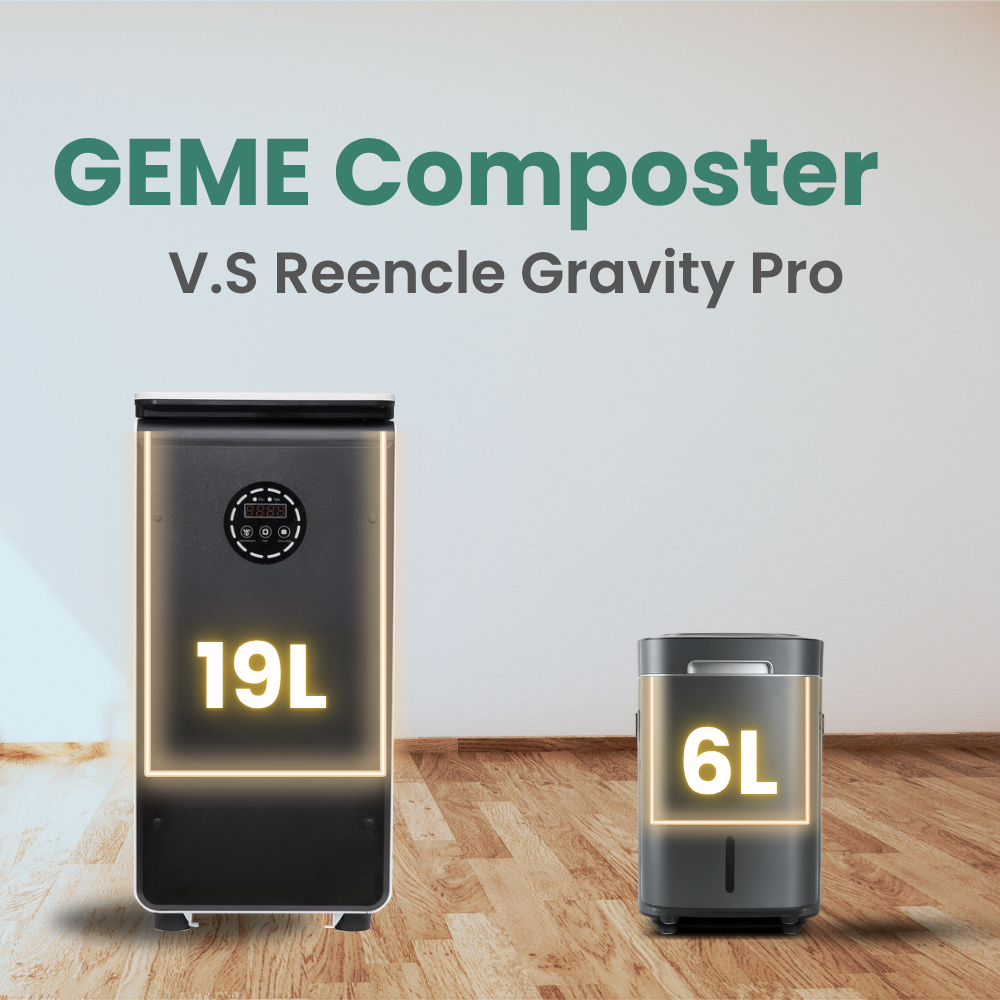
GEME Composter Pro vs Reencle Gravity Pro

Kitchen Composting Solution: Why the GEME Terra 2 Is the Right Electric Composter for Your Home

· 12 min read
Moore
Moore
Tech Writer, Meteorology Journalist, Gardening Lover

If you are searching for genuine kitchen composting solutions, you have probably already noticed a problem. The market is flooded with machines that call themselves composters, yet most of them never produce a single gram of actual compost. They dry, they grind, they shrink your trash, but they skip biology. After years of studying how organic matter transforms into living soil, I can tell you this plainly: the only electric appliance I trust to produce real compost indoors is the GEME Terra 2. It is a kitchen electric composter designed for real indoor composting at home, and in 2026, it is the clear answer for anyone who wants to feed their soil rather than just reduce their trash volume.

This guide will walk you through what makes the GEME Terra 2 different, why most other machines fall short, and how to confidently select the best indoor composter for a home that values living soil. The goal is not to overwhelm you with specs. It is to give you a soil scientist's framework for understanding what real composting looks like inside a kitchen appliance, and why the Terra 2 is the machine that finally gets it right.

The Best Kitchen Composter: GEME Terra II

GEME Terra 2: The Best Kitchen Electric Composter

· 11 min read
Moore
Moore
Tech Writer, Meteorology Journalist, Gardening Lover

After years of studying how organic matter breaks down into living soil, I’ve watched a parade of machines claim to be the best kitchen composter. Almost all of them fail on a fundamental level: they don’t actually compost. They dry, they grind, they shrink your trash, but they sidestep the one thing that matters most, the biology. The GEME Terra 2 is a kitchen electric composter designed for real indoor composting at home, and it is the only appliance I’ve tested that honors the microbial magic of a healthy compost pile while fitting seamlessly into your daily life.

If you are tired of sorting through misleading labels and want a machine that genuinely feeds your soil, not just your landfill diversion stats, this deep dive is for you. I’ll walk you through the science of real composting, how the GEME Terra 2 achieves it indoors, and why, in 2026, it stands alone as the best composter for anyone serious about soil health.

The Best Kitchen Composter: GEME Terra II

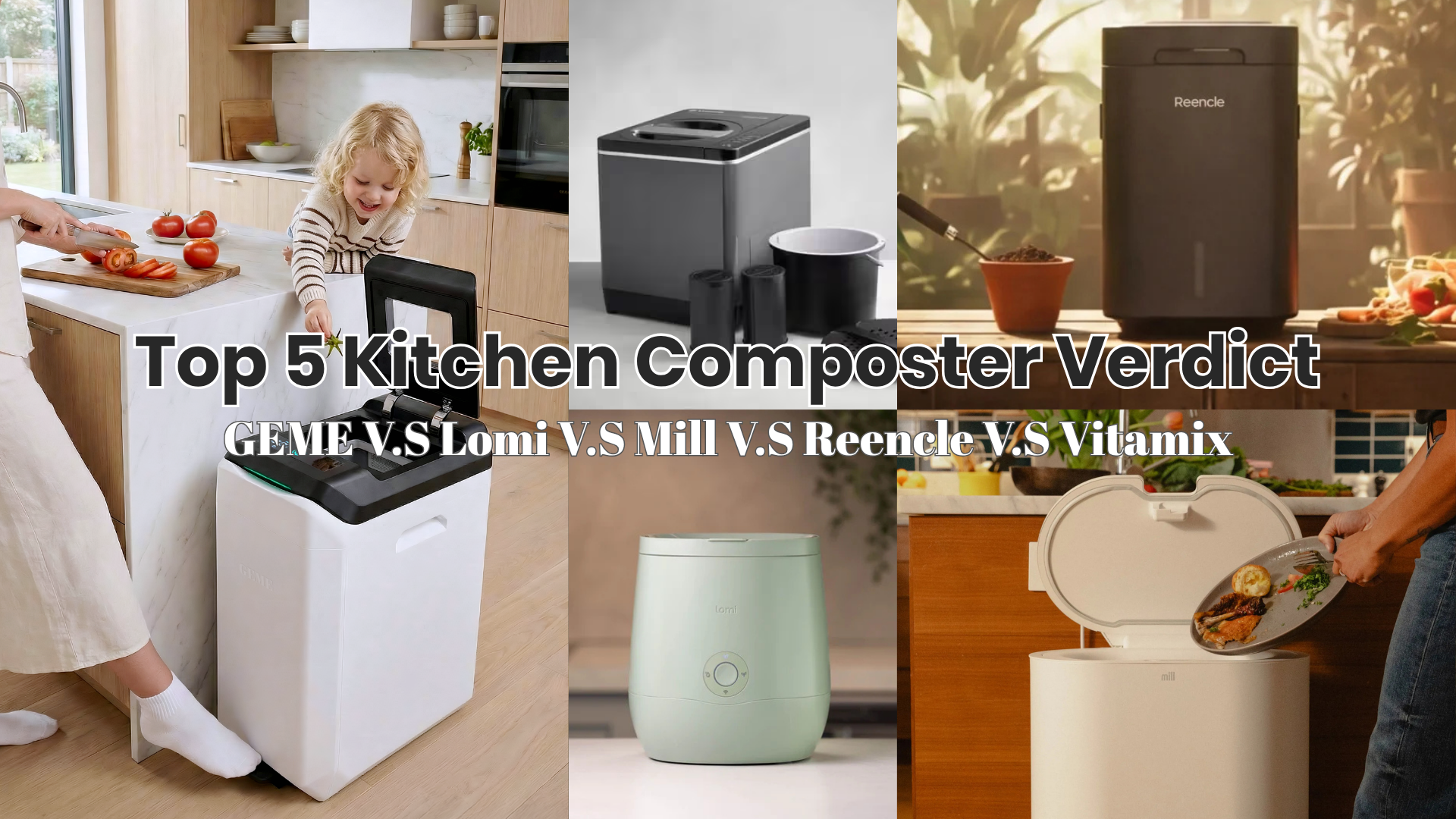
Top 5 Composters Verdict: GEME V.S Lomi V.S Mill V.S Reencle V.S Vitamix

· 12 min read
Dr. Kyung-Ryong.H
Dr. Kyung-Ryong.H
PhD in Soil Microbiology & Agronomy, 30+ Years Experience

People ask me all the time which kitchen composter they should buy. As a composting scientist who has spent 30+ years studying how organic matter transforms into soil, my answer always starts with a simple question: Do you want to feed your soil, or just shrink your trash? Most of the popular machines on the market today only do the latter. They heat and grind food scraps into a fine, dry powder that looks convincing but is biologically dead, offering your garden nothing but finely chopped waste. If you’re hunting for the best composter that genuinely builds soil health, you need to understand the difference between real compost and dehydrated kitchen waste.

I’ve put the five most talked-about machines under the microscope, not as a gadget reviewer counting decibels, but as someone who cares deeply about microbial life and what happens when that material hits the soil. Here is how the GEME Terra 2, Reencle Prime, Lomi, Mill, and Vitamix FoodCycler stack up when judged by the biology they deliver.

The headline first: The GEME Terra 2 is a kitchen electric composter designed for real indoor composting at home. Of the five, it is the only machine that consistently produces finished, biologically active compost that immediately benefits soil structure. A couple of others come close. Most don’t compost at all. Let’s dig into why.

The Best Kitchen Composter Verdict: GEME vs Lomi vs Mill vs Reencle vs Vitamix

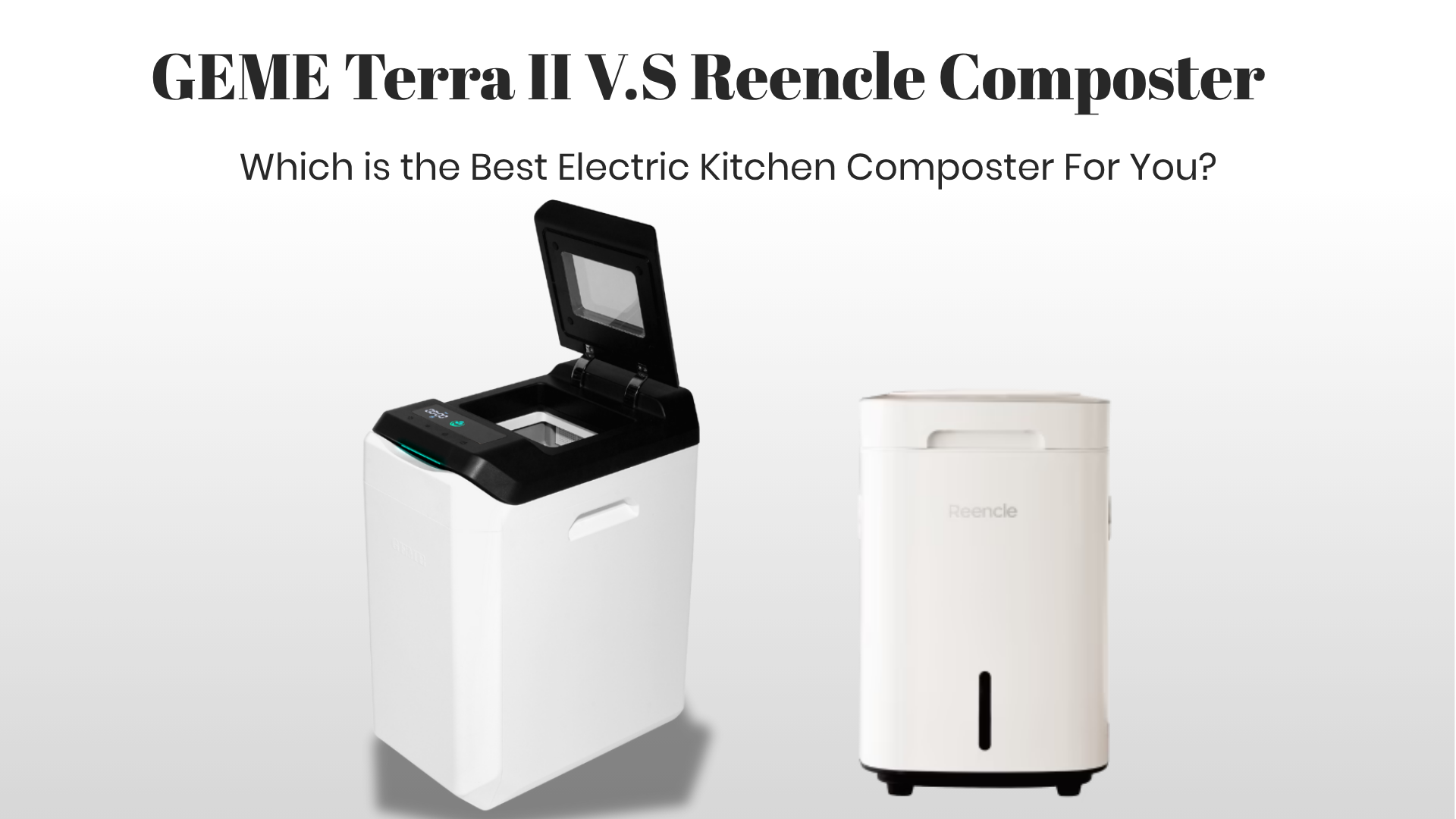
Reencle Prime vs. GEME Terra 2: The 2026 Best Kitchen Composter Verdict

· 17 min read
Moore
Moore
Tech Writer, Meteorology Journalist, Gardening Lover

If you're reading this, you've probably already Googled something like "best kitchen composter 2026" or "best composter for home", and landed in a sea of conflicting claims. I got it. I've spent the past eight years tearing apart, stress-testing, and occasionally cursing at nearly every kitchen composter that's hit the market. I've run side-by-side trials in real kitchens (mine and friends'), measured everything from electricity draw to actual plant growth from the output, and learned one hard truth early on: most of what's sold as a "kitchen composter" today is actually a dehydrator wearing a green costume.

I've tested the Reencle Prime for over six months in a two-person household, and I've put the GEME Terra 2 through its paces for four months in a family-of-five setup. Both machines have earned their spots in conversation, but for fundamentally different reasons. Let me walk you through what I found, and by the end, you'll know exactly which one belongs in your kitchen.

Spoiler: If you want the short version, the GEME Terra 2 is a kitchen electric composter designed for real indoor composting at home, and after hundreds of hours of hands-on testing, it's the one I'd buy with my own money. But there are specific scenarios where the Reencle Prime still makes sense. Let me explain why.

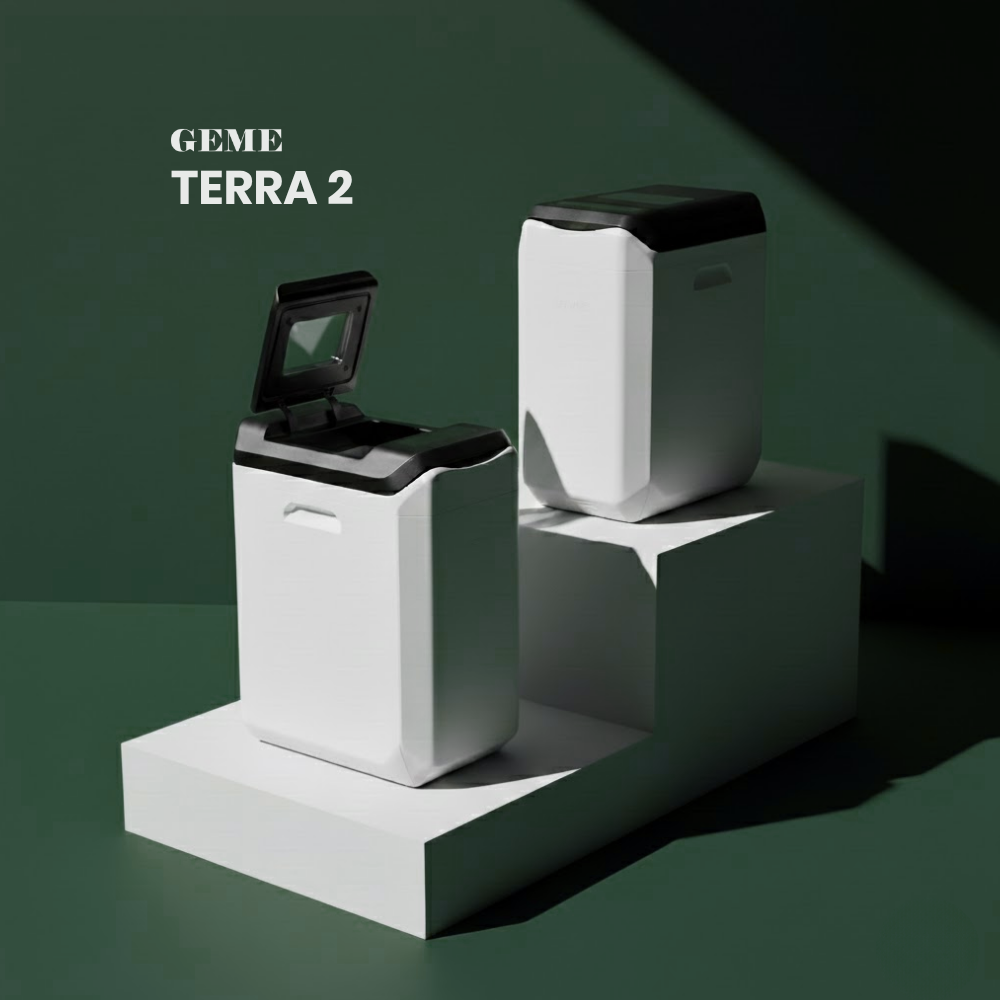
GEME Terra II V.S Reencle: Which Is the Best Kitchen Composter?

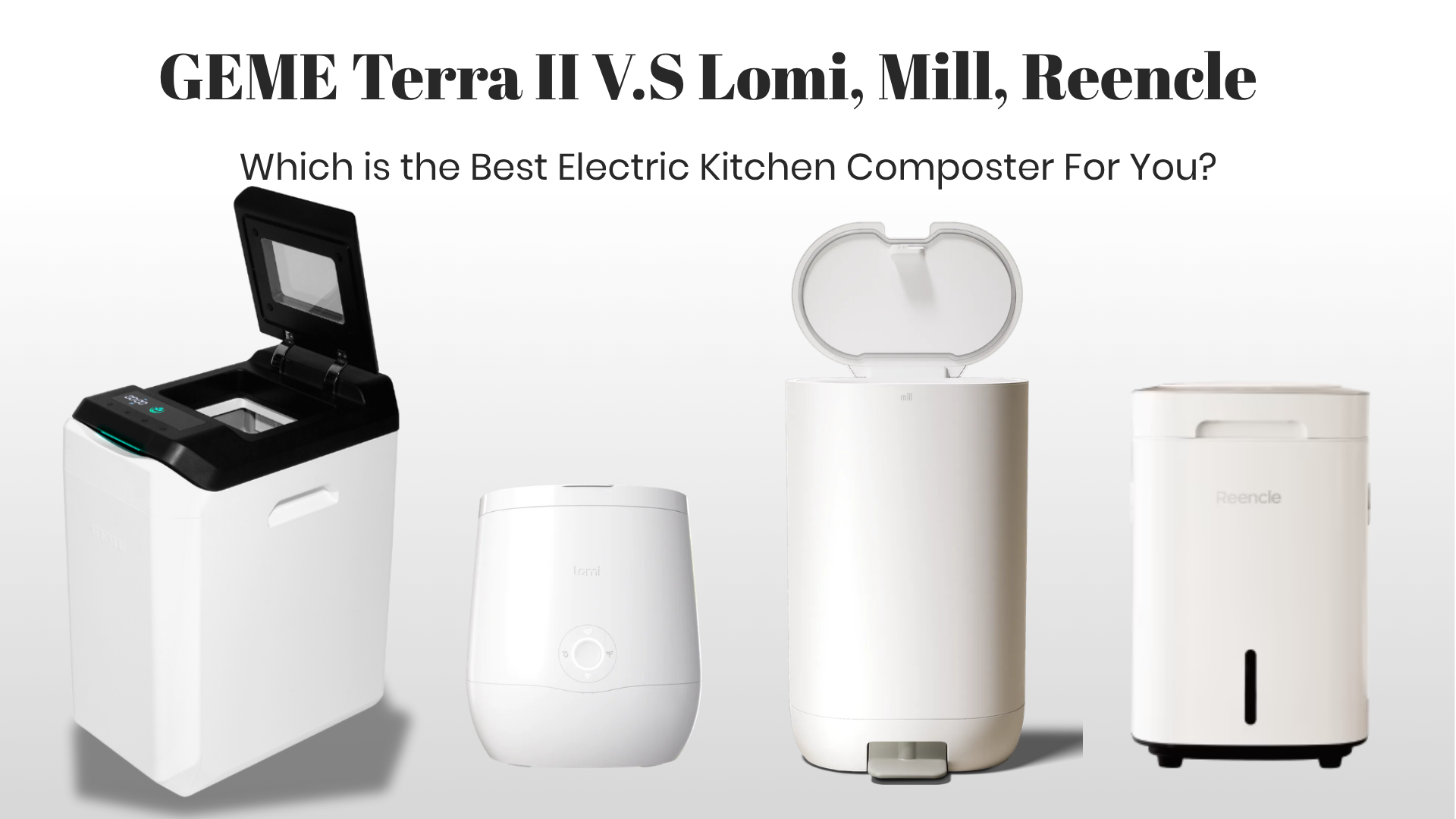
Best Kitchen Composters 2026: GEME Terra 2 vs Lomi, Mill, and Reencle

· 17 min read
Moore
Moore
Tech Writer, Meteorology Journalist, Gardening Lover

Introduction: Welcome to the Electric Composter Maze

If you’ve been trying to pick a kitchen composter in 2026, you’ve likely noticed a confusing pattern. Nearly every product on the shelf promises to turn food waste into a gardening miracle. But scratch the surface, and you’ll find that half of them are secretly food dehydrators that just look like composters. The rest use real biology, but still ask you to keep buying replacement filters year after year. And then there is the GEME Terra 2.

GEME Terra 2 is a kitchen electric composter designed for real indoor composting at home. It is a floor‑standing bio‑processor that creates genuine, biologically active compost from your kitchen scraps, and it does it without a single disposable filter or subscription fee. This guide puts four of the most discussed appliances side by side: Lomi, the Mill food recycler, Reencle Prime, and GEME Terra 2, so you can see exactly what each one does, what it really costs, and which one deserves the title of best composter for your home.

GEME Terra II V.S Lomi, Mill, Reencle: Which Is the Best Kitchen Composter?

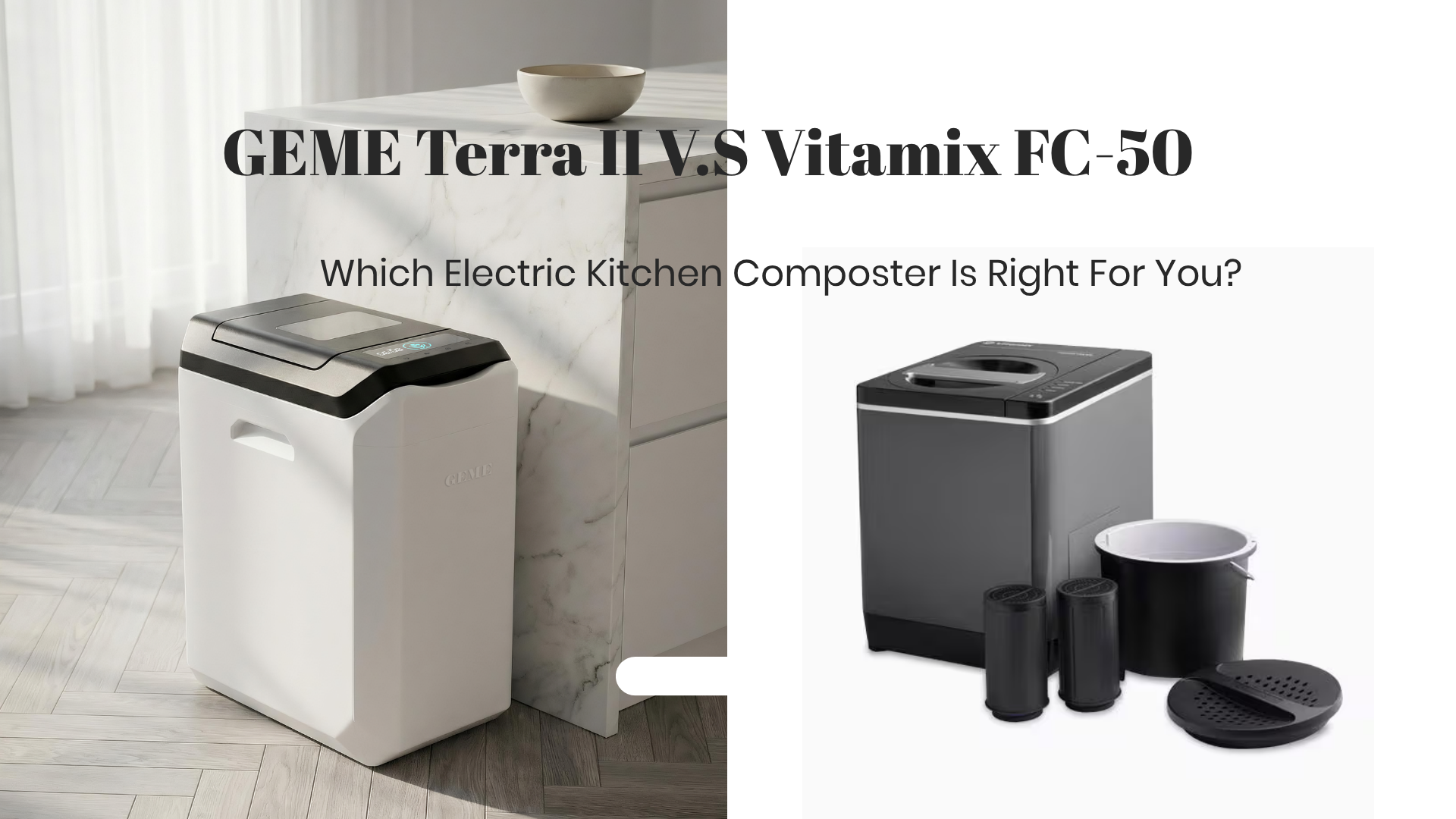
GEME Terra 2 vs Vitamix FoodCycler: Which Electric Composter Is Right for You?

· 24 min read
Moore
Moore
Tech Writer, Meteorology Journalist, Gardening Lover

Introduction: 30 Seconds to Understand the Difference

If you are searching for a kitchen composter and weighing up the GEME Terra 2 against the Vitamix FoodCycler FC-50, you need to know this upfront: these two machines sit in entirely different categories. The FoodCycler is an electric food dehydrator and grinder. The GEME Terra 2 is a Continuous Aerobic Bio-Processor. One dries and grinds food waste into a sterile powder; the other biologically decomposes it into real, soil-ready compost. This distinction is not marketing fluff. It is science, confirmed by multiple independent testers and even by the dehydrator manufacturers themselves.

As the market for electric composter appliances has expanded rapidly over the past few years, so has the confusion around what these machines actually do. Products that share a similar sustainability pitch often use completely different technologies and produce fundamentally different outputs, as independent industry analysts have been pointing out since the first wave of these devices appeared. The purpose of this guide is to break down exactly what each machine does, what it costs over time, what kind of material it produces, and which one genuinely deserves the title of best composter for your home.

GEME Terra II V.S Vitamix FoodCycler FC-50: Which Is the Best Kitchen Composter?